
The Translator's Search for a Key
I ChingThis flow follows Legge's personal progression from an unsuccessful early translation to a more confident historical and interpretive method.
increasing Bearing strength in each event
 decreasing
Bearing strength in each eventdecreasingA First Translation
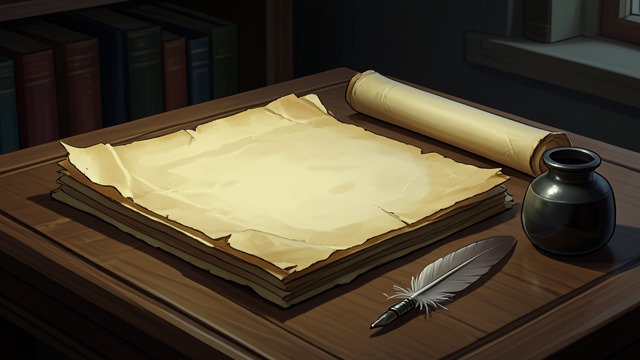
Labor Without a Key
The early manuscript
Legge translated the text and appendixes but later admitted that he understood little of the book's scope or method. He set the work aside in hope of finding a clearer approach.
The account begins with intellectual effort that has not yet become comprehension.
A problem of arrangement
The received editions intermix the ancient text and later explanations. Legge says this encourages readers to mistake historically distinct voices for a unified composition.
The obstacle is not simply difficult language; it is an inherited structure that directs interpretation before it begins.
A Damaged Manuscript

Translation Through Disaster
Water damage
Legge's manuscript spent more than a month in water from the Red Sea. Careful handling made it legible again, but recovery of the pages did not yet resolve their meaning.
The episode gives physical form to the precariousness of long scholarly labor.
The delayed breakthrough
Only after renewed attention beginning in 1874 did Legge believe he had found a clue. The work he had completed decades earlier now seemed of little use.
A surviving document can preserve effort without preserving insight; the scholar must still learn how to read it.
The Text Stands Alone

Separating the Voices
A changed procedure
Legge studies the core text by itself, using an edition that keeps text and appendixes separate. He builds distinct concordances to compare their vocabularies.
The method turns linguistic difference into evidence about chronology and authorship.
A changed interpretation
He comes to see the core as a self-contained set of symbolic essays about moral and political life. The appendixes may illuminate it, but they cannot simply be treated as its original voice.
The discovery supplies the key that the earlier translation lacked: historical separation must precede synthesis.
Words Give Way to Thought
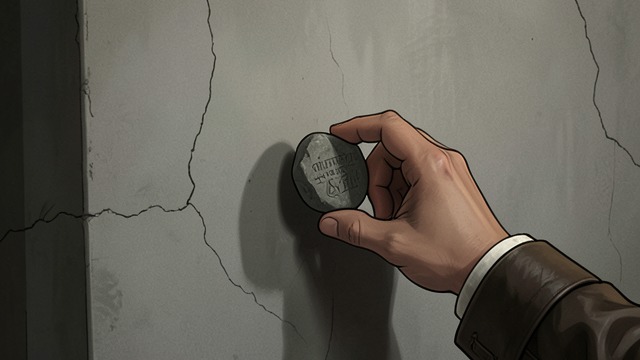
Translating Ideas
Beyond literal equivalence
Legge argues that Chinese written characters do not map neatly onto English words. A translator must grasp the author's thought and then express it clearly in another language.
He invokes the principle of meeting a sentence's scope through thought rather than mechanically reproducing its surface form.
The danger of freedom
This method is not permission to invent. Legge says that the goal remains concise and exact expression, with occasional additions to make implicit relations intelligible.
His translation style therefore balances interpretation against discipline, seeking clarity without pretending that the original is transparent.
A Published Interpretation
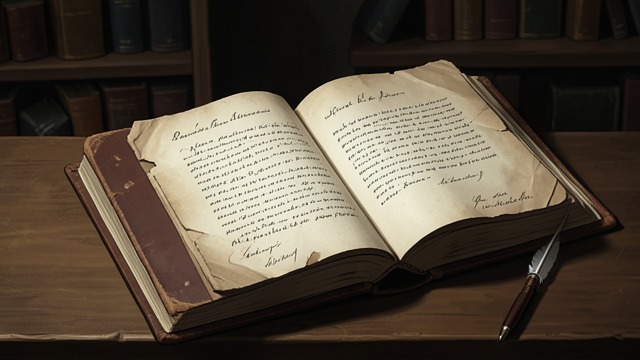
The Work Reaches Print
A completed argument
Legge presents his translation with a commentary that explains how figures and line positions support the readings. He acknowledges that the work is difficult and that his conclusions remain interpretive.
The printed book embodies decades of revision rather than a single act of translation.
A claim about the classic
He rejects the idea that the core text is merely a mysterious fortune-telling manual, while acknowledging its divinatory origins and style.
The ending is not final certainty; it is a reasoned interpretation offered after prolonged comparison, revision, and attention to historical layers.
1854–1855
1870
From 1874 onward
During the later translation
16 March 1882
